

Surah Al-Jumu’ah (The Congregational Prayer) is the 62nd chapter of the Holy Quran, which contains 11 verses. It is named after the Friday prayer (Salat Al-Jumu’ah), which is a day of great importance in Islam as a day of congregational worship, reflection, and unity. This surah so beautifully encapsulates themes of faith, gratitude, knowledge, and the responsibilities of believers.
Click here for Surah Juma Pdf
Surah Juma is one of the most beautiful and spiritually uplifting chapters of the Holy Quran. It reminds Muslims about the importance of faith, knowledge, and gathering for the Friday prayer. Many believers search for Surah Juma PDF so they can read and understand this blessed Surah anytime and anywhere.
In this article, we will discuss the meaning of Surah Juma, its benefits, and why it is important for Muslims, especially on Fridays.
What Is Surah Juma?
Surah Juma (سورة الجمعة) is the 62nd chapter of the Holy Quran and contains 11 verses (ayat). It was revealed in Madinah and highlights the importance of remembering Allah and attending the Friday prayer (Jumu’ah).
The Surah teaches Muslims that worldly business and distractions should never be more important than the remembrance of Allah. When the call for Friday prayer is announced, believers should leave their work and go to the mosque to worship.
This Surah also explains the blessings that come from following the teachings of Prophet Muhammad (peace be upon him) and staying connected with the Quran.
Read our guide on Dua for Love Marriage if you are seeking a blessed Nikah.
Importance of Surah Juma
Surah Juma has great significance in Islam because it reminds Muslims about the special day of Friday (Jumu’ah). Friday is considered the most blessed day of the week.
Allah says in this Surah that when the call to prayer is made on Friday, Muslims should leave trade and gather for prayer. This teaches believers the importance of prioritizing their faith over worldly activities.
Reciting and understanding Surah Juma helps Muslims strengthen their connection with Allah and remember their purpose in life.
Benefits of Reading Surah Juma
Many scholars mention several spiritual benefits of reciting Surah Juma regularly. Some of the most important benefits include:
1. Strengthens Faith
Surah Juma reminds believers about the greatness of Allah and the importance of following the teachings of Islam. This helps strengthen faith and belief.
2. Brings Spiritual Peace
Reciting Quranic verses brings calmness to the heart. Surah Juma helps remove stress and fills the heart with peace and positivity.
3. Reminds Muslims About Friday Prayer
One of the main messages of this Surah is the importance of attending the Friday prayer. It encourages Muslims to leave worldly matters and remember Allah.
4. Increases Knowledge
The Surah highlights the importance of knowledge and guidance given through the Quran and Prophet Muhammad (PBUH).
5. Brings Blessings in Life
Reading the Quran regularly, including Surah Juma, brings blessings, guidance, and protection from difficulties.
Message of Surah Juma
Surah Juma contains powerful messages that guide Muslims in their daily lives. The main lessons from this Surah include:
- Allah is the Creator and Owner of everything.
- Prophet Muhammad (PBUH) was sent as a guide for humanity.
- Knowledge and wisdom come from the Quran.
- Muslims should gather for Friday prayer and remember Allah.
- Worldly business should not distract believers from worship.
These teachings encourage Muslims to live a balanced life by fulfilling both spiritual and worldly responsibilities.
Learn the powerful Dua for Love Attraction in Islam to strengthen your faith.
Why Muslims Read Surah Juma on Friday
Friday is known as Jumu’ah, which is a special day of worship in Islam. Muslims gather in mosques to perform the Friday prayer and listen to a sermon (Khutbah).
Surah Juma emphasizes the importance of this gathering. It reminds believers that remembering Allah together strengthens the Muslim community and brings unity among people.
Many Muslims also read Quranic chapters on Friday to increase blessings and spiritual rewards.
Key Themes of Surah Al-Jumu’ah
Glorification of Allah
The surah starts with the glorification of Allah’s majesty and sovereignty:
Whatever is in the heavens and whatever is on earth glorifies Allah, the Sovereign, the Pure, the All-Mighty, the All-Wise.” (62:1)
This verse is a reminder that Allah is almighty, and that all of His creation has a perfect concordance in worshipping Him.
The Role of the Prophet Muhammad (PBUH)
Surah Al-Jumu’ah reminds mankind of the significance of the Prophet Muhammad in guiding humankind:
“He is the One Who raised for the illiterate people a messenger from among themselves, reciting to them His verses, purifying them, and teaching them the Book and wisdom.” (62:2)
The mission of the Prophet was not only to deliver the message of the Quran but also to educate the people with their moral and spiritual character.
Audio for Surah Juma
Surah Al-Jumu’ah Arabic to English
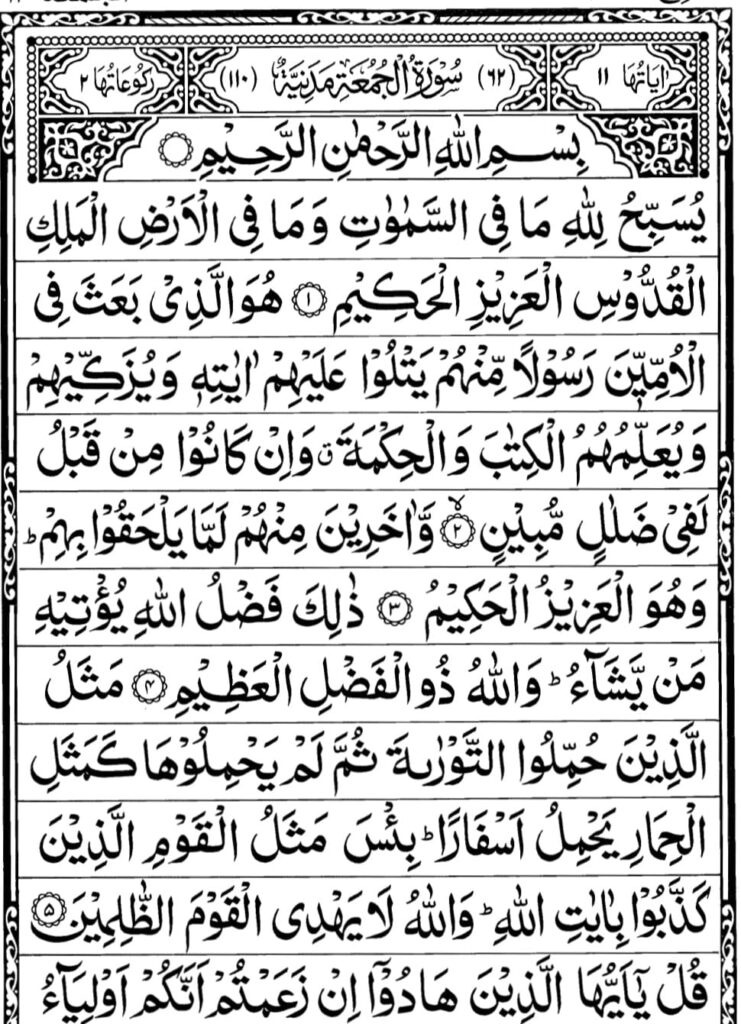
سورة الجمعة مكتوبة – Surah Al-Jumuah
يُسَبِّحُ لِلَّهِ مَا فِي السَّمَاوَاتِ وَمَا فِي الْأَرْضِ الْمَلِكِ الْقُدُّوسِ الْعَزِيزِ الْحَكِيمِ(1)
Yusabbihu lilaahi maa fis samaawaati wa maa fil ardil Malikil Quddoosil `Azeezil Hakeem
هُوَ الَّذِي بَعَثَ فِي الْأُمِّيِّينَ رَسُولًا مِّنْهُمْ يَتْلُو عَلَيْهِمْ آيَاتِهِ وَيُزَكِّيهِمْ وَيُعَلِّمُهُمُ الْكِتَابَ وَالْحِكْمَةَ وَإِن كَانُوا مِن قَبْلُ لَفِي ضَلَالٍ مُّبِينٍ(2)
Huwal lazee baasa fil ummiyyeena Rasoolam min hum yatlooalaihim aayaatihee wa yuzakkeehim wa yu`allimuhumul Kitaaba wal Hikmata wa in kaano min qablu lafee dalaalim mubeen
وَآخَرِينَ مِنْهُمْ لَمَّا يَلْحَقُوا بِهِمْ ۚ وَهُوَ الْعَزِيزُ الْحَكِيمُ(3)
Wa aakhareena minhum lammaa yalhaqoo bihim wa huwal `azeezul hakeem
ذَٰلِكَ فَضْلُ اللَّهِ يُؤْتِيهِ مَن يَشَاءُ ۚ وَاللَّهُ ذُو الْفَضْلِ الْعَظِيمِ(4)
Zaalika fadlul laahi yuteehi many-yashaaa; wallaahu zul fadilazeem
مَثَلُ الَّذِينَ حُمِّلُوا التَّوْرَاةَ ثُمَّ لَمْ يَحْمِلُوهَا كَمَثَلِ الْحِمَارِ يَحْمِلُ أَسْفَارًا ۚ بِئْسَ مَثَلُ الْقَوْمِ الَّذِينَ كَذَّبُوا بِآيَاتِ اللَّهِ ۚ وَاللَّهُ لَا يَهْدِي الْقَوْمَ الظَّالِمِينَ(5)
Masalul lazeena hum milut tawraata summa lam yahmiloonhaa kamasalil himaari yah milu asfaaraa; bi`sa masalul qawmil lazeena kaazzaboo bi aayaatil laah; wallaahu laa yahdil qawmazzaalimeen
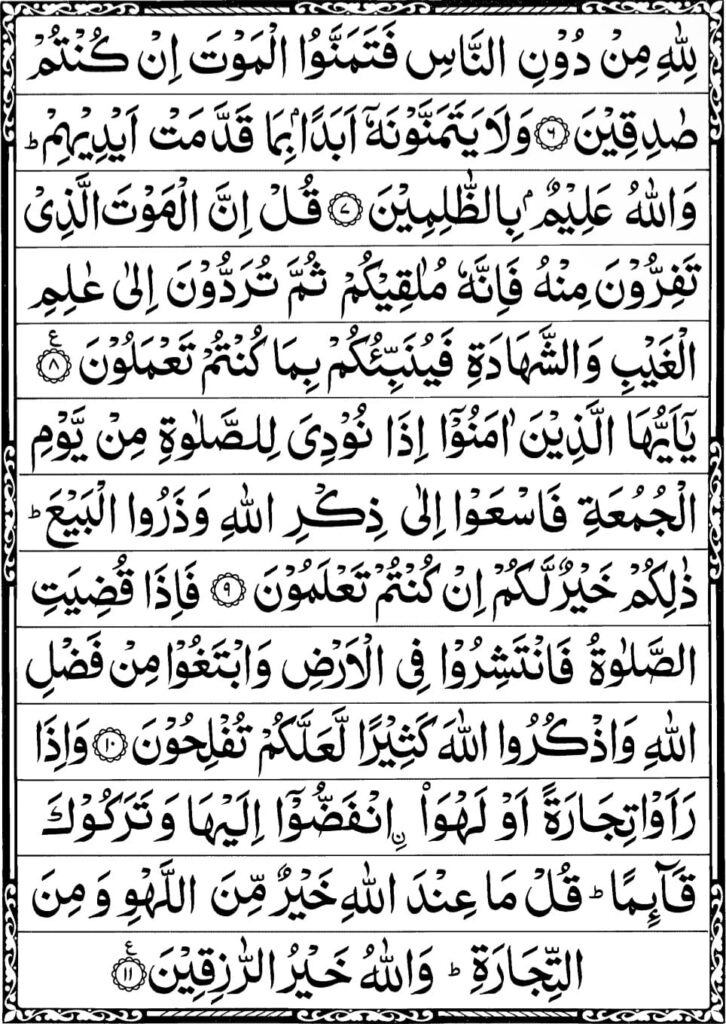
قُلْ يَا أَيُّهَا الَّذِينَ هَادُوا إِن زَعَمْتُمْ أَنَّكُمْ أَوْلِيَاءُ لِلَّهِ مِن دُونِ النَّاسِ فَتَمَنَّوُا الْمَوْتَ إِن كُنتُمْ صَادِقِينَ(6)
Qul yaaa ayyuhal lazeena haadoo in zaamtum annakum awliyaaau lilaahi min doonin naasi fatamannawul mawta in kuntum saadiqeen
وَلَا يَتَمَنَّوْنَهُ أَبَدًا بِمَا قَدَّمَتْ أَيْدِيهِمْ ۚ وَاللَّهُ عَلِيمٌ بِالظَّالِمِينَ(7)
Wa laa yatamannaw nahooo abadam bimaa qaddamat aydeehim; wallaahu `aleemum bix zaalimeen
قُلْ إِنَّ الْمَوْتَ الَّذِي تَفِرُّونَ مِنْهُ فَإِنَّهُ مُلَاقِيكُمْ ۖ ثُمَّ تُرَدُّونَ إِلَىٰ عَالِمِ الْغَيْبِ وَالشَّهَادَةِ فَيُنَبِّئُكُم بِمَا كُنتُمْ تَعْمَلُونَ(8)
Qul innal mawtal lazee tafirroona minhu fa innahoo mulaaqeekum summa turaddoona ilaa Aalimil Ghaibi wash shahaadati fa yunabbiukum bimaa kuntum ta`maloon
يَا أَيُّهَا الَّذِينَ آمَنُوا إِذَا نُودِيَ لِلصَّلَاةِ مِن يَوْمِ الْجُمُعَةِ فَاسْعَوْا إِلَىٰ ذِكْرِ اللَّهِ وَذَرُوا الْبَيْعَ ۚ ذَٰلِكُمْ خَيْرٌ لَّكُمْ إِن كُنتُمْ تَعْلَمُونَ(9)
Yaaa ayyuhal lazeena aamanoo izaa noodiya lis-Salaati miny yawmil Jumuati fasaw ilaa zikril laahi wa zarul bai; zaalikum khayrul lakum in kuntum talamoon
فَإِذَا قُضِيَتِ الصَّلَاةُ فَانتَشِرُوا فِي الْأَرْضِ وَابْتَغُوا مِن فَضْلِ اللَّهِ وَاذْكُرُوا اللَّهَ كَثِيرًا لَّعَلَّكُمْ تُفْلِحُونَ(10)
Fa-izaa qudiyatis Salaatu fantashiroo fil ardi wabtaghoo min fadlil laahi wazkurul laaha kaseeral la`allakum tuflihoon
وَإِذَا رَأَوْا تِجَارَةً أَوْ لَهْوًا انفَضُّوا إِلَيْهَا وَتَرَكُوكَ قَائِمًا ۚ قُلْ مَا عِندَ اللَّهِ خَيْرٌ مِّنَ اللَّهْوِ وَمِنَ التِّجَارَةِ ۚ وَاللَّهُ خَيْرُ الرَّازِقِينَ(11)
Wa izaa raaw tijaaratan aw lahwanin faddooo ilaihaa wa tarakooka qaaaimaa; qul maa `indal laahi khairum minal lahwi wa minat tijaarah; wallaahu khayrur raaziqeen
The Burden of Knowledge
The surah warns about those who have been grant the sacred knowledge but remain negligent of it:
The parable of those whom the Book hath been given but who take it for a mere game. Is like that of a donkey carrying volumes [of books].” (62:5)
This is a reminder to Muslims to be genuine in their duties and not to ignore the will of God.
Surah Juma Hindi Tarjuma (Translation)
यहाँ सूरह जुमा का हिंदी उच्चारण (Transliteration) और आसान तर्जुमा दिया गया है।
बिस्मिल्ला-हिर्रहमा-निर्रहीम
(शुरू अल्लाह के नाम से जो बहुत बड़ा मेहरबान व निहायत रहम वाला है)
- युसब्बिहु लिल्लाहि मा फिस्समावाति व मा फिल्अर्जि, अल-मलिकिल कुद्दूसिल अज़ीज़िल हकीम
(जो चीज़ आसमानों में है और जो चीज़ ज़मीन में है सब अल्लाह की तस्बीह (पाकी बयान) करती हैं, जो (हक़ीक़ी) बादशाह है, निहायत पाक है, ज़बरदस्त है, हिकमत वाला है।) - हुवल्लज़ी बअसा फ़िल उममय्यीन रसूलम मिन्हुम यतलू अलैहिम आयातिही व युज़क्कीहिम व युअल्लिमुहुमुल किताबा वल हिकमह, व इन कानू मिन कब्लु लफ़ी जलालिम मुबीन
(वही तो है जिसने अनपढ़ लोगों (अरबों) में उन्हीं में से एक रसूल (मुहम्मद ﷺ) भेजा जो उनके सामने उसकी आयतें पढ़ते हैं और उनको पाक (साफ़) करते हैं और उन्हें किताब (कुरान) और हिकमत (सुन्नत) सिखाते हैं। और बेशक इससे पहले ये लोग खुली गुमराही में थे।) - व आखिरीन मिन्हुम लम्मा यल्हकू बिहिम व हुवल अज़ीजुल हकीम
(और (उसने इस रसूल को) उन दूसरे लोगों की तरफ भी (भेजा) है जो अभी उनसे नहीं मिले (यानी बाद में आने वाले मुसलमान)। और वही ग़ालिब हिकमत वाला है।) - ज़ालिका फज्लुल्लाही यू तीहि मंय्यशाउ वल्लाहु जुल फज्लिल अज़ीम
(ये अल्लाह का फज़ल है, जिसे चाहता है अता करता है। और अल्लाह बड़े फज़ल वाला है।) - मसलुल्लज़ीन हुम्मिलुत्तौरा-त सुम्मा लम यहमिलूहा कमसलिल हिमारि यहमिलु अस्फारा, बिअसा मसलुल कौमिल्लज़ी-न कज्जबु बि-आयातिल्लाह, वल्लाहु ला यहदिल कौमज्ज़ालिमीन
(जिन लोगों पर तौरात का बोझ डाला गया (यानी उस पर अमल करने को कहा गया) फिर उन्होंने उसे नहीं उठाया, उनकी मिसाल गधे जैसी है जिस पर किताबें लदी हों। कितनी बुरी मिसाल है उन लोगों की जिन्होंने अल्लाह की आयतों को झुठलाया। और अल्लाह ज़ालिम लोगों को हिदायत (रास्ता) नहीं देता।) - कुल या अय्युहल्लज़ीन हादू इन ज़अमतुम अन्नकुम औलियाउ लिल्लाहि मिन दूनिन्नासि फ़तमन्नवुल मौता इन कुन्तुम सादिकीन
(आप कह दीजिये: ऐ यहूदियों! अगर तुम्हारा गुमान (ख्याल) है कि तमाम लोगों को छोड़कर तुम ही अल्लाह के दोस्त हो, तो अगर तुम सच्चे हो तो मौत की तमन्ना करो।) - वला यतमन्नौहु अबदम बिमा कद्दमत ऐदीहिम, वल्लाहु अलीमुम बिज्जालिमीन
(और वो अपनी हरकतों की वजह से जो (वो) पहले कर चुके हैं, कभी मौत की तमन्ना नहीं करेंगे। और अल्लाह ज़ालिमों को खूब जानता है।) - कुल इन्नल मौतल्लज़ी तफिररूना मिन्हु फइन्नहु मुलाकीकुम सुम्मा तुरदूना इला आलिमिल गैबि वश्शहादह, फयुनब्बिउकुम बिमा कुन्तुम तामलून
(कह दीजिये: जिस मौत से तुम भागते हो वो तो तुम्हें आकर रहेगी। फिर तुम उस (अल्लाह) की तरफ लौटाए जाओगे जो छिपे और ज़ाहिर को जानता है, फिर वो तुम्हें तुम्हारे किये हुए काम बता देगा।) - या अय्युहल्लज़ीन आमनू इजा नूदिया लिस्सलाति मिय्यौमिल जुमु-अति फ़सऔ इला ज़िकरिल्लाहि व ज़रुल बैअ, जालिकुम खैरुल्लकुम इन कुन्तुम तामलून
(ऐ ईमान वालों! जब जुमा के दिन नमाज़ के लिए अज़ान दी जाए तो अल्लाह के ज़िक्र (नमाज़/ख़ुत्बा) की तरफ़ दौड़ पड़ो और ख़रीद-फरोख्त (कारोबार) छोड़ दो। अगर तुम समझ रखते हो तो ये तुम्हारे हक़ में ज्यादा बेहतर है।) - फ़इज़ा कुज़ियतिस्सलातु फन्तशिरू फिल अर्जि वब्तगू मिन फज्लिल्लाहि वज्कुरुल्लाहा कसीरल लअल्लकुम तुफलिहून
(फिर जब नमाज़ पूरी हो जाए तो ज़मीन में फ़ैल जाओ और अल्लाह का फज़ल (रोज़ी) तलाश करो और अल्लाह को कसरत से (खूब) याद करते रहो ताकि तुम कामयाब हो जाओ।) - व इज़ा रअव तिजारतन अव लहवनिन फज्जू इलैहा व तरकूका काइमा, कुल मा इन्दल्लाहि खैरुम मिनल्लहवि व मिनत्तिजारह, वल्लाहु खैरुर्राजिकीन
(और जब ये लोग कोई सौदा बिकता या तमाशा होता देखते हैं तो उधर भाग खड़े होते हैं और आपको (ख़ुत्बे में) खड़ा छोड़ जाते हैं। कह दीजिये कि जो कुछ अल्लाह के पास है, वो खेल-तमाशे और तिजारत से बेहतर है और अल्लाह सबसे बेहतर रोज़ी देने वाला है।
Jumu’ah Prayer
One of the most significant moments in the surah is when the command to go to the Friday congregational prayer is issued:
“O you who have believed, when the call is made for prayer on the day of Jumu’ah, then proceed to the remembrance of Allah and leave trade. That is better for you if you only knew.” (62:9)
The verse brings out the importance of worshipping rather than worldly engagement, especially on this special day.

Reflection on earthly desires
That was a reminder to the people when the surah ends. How they should maintain balance at the center of their worldly lives and Allah at that center.
Lessons and Reflections
Unity in Worship: The Friday’s congregational prayer is always an excellent example of solidarity. Because it unites persons of all walks of lives who stand side by side to worship.
The Value of Knowledge: Surah Al-Jumu’ah reminds us of the weight of knowledge and the need to act upon it with sincerity.
Prioritizing Faith: By commanding the believers to leave their trade for Jumu’ah prayer. The surah teaches the importance of prioritizing spiritual obligations over material pursuits.
Virtues of Reciting Surah Al-Jumu’ah
It is considered that the blessings of Surah Al-Jumu’ah are a source of calmness, peace, and blessings, and increase connectivity with Allah.
Recite on Fridays: It was recommended by the Prophet Muhammad (PBUH). To recite this particular surah, especially the Friday prayer, with Al-Munafiqun.
Related Posts
- Surah Mulk- Powerful wazifa for protection
- Surah Rahman (55th chapter) – Powerful Blessings Guide
- Surah Yaseen – The Heart of the Quran
- Surah Baqarah – Guide for Protection and Blessings
Conclusion
Surah Al-Jumu’ah is a chapter that calls on the Muslim individual to reflect on his religion, responsibilities, and priorities. It beautifully balances between worshipping and living life with a call. To believers to strengthen their connection with Allah while fulfilling their duties in the world.
Read more about Surah Al-Jumu’ah on SurahJuma.com . To find translations, tafsir, recitations, and resources for deepening your understanding and spiritual journey.